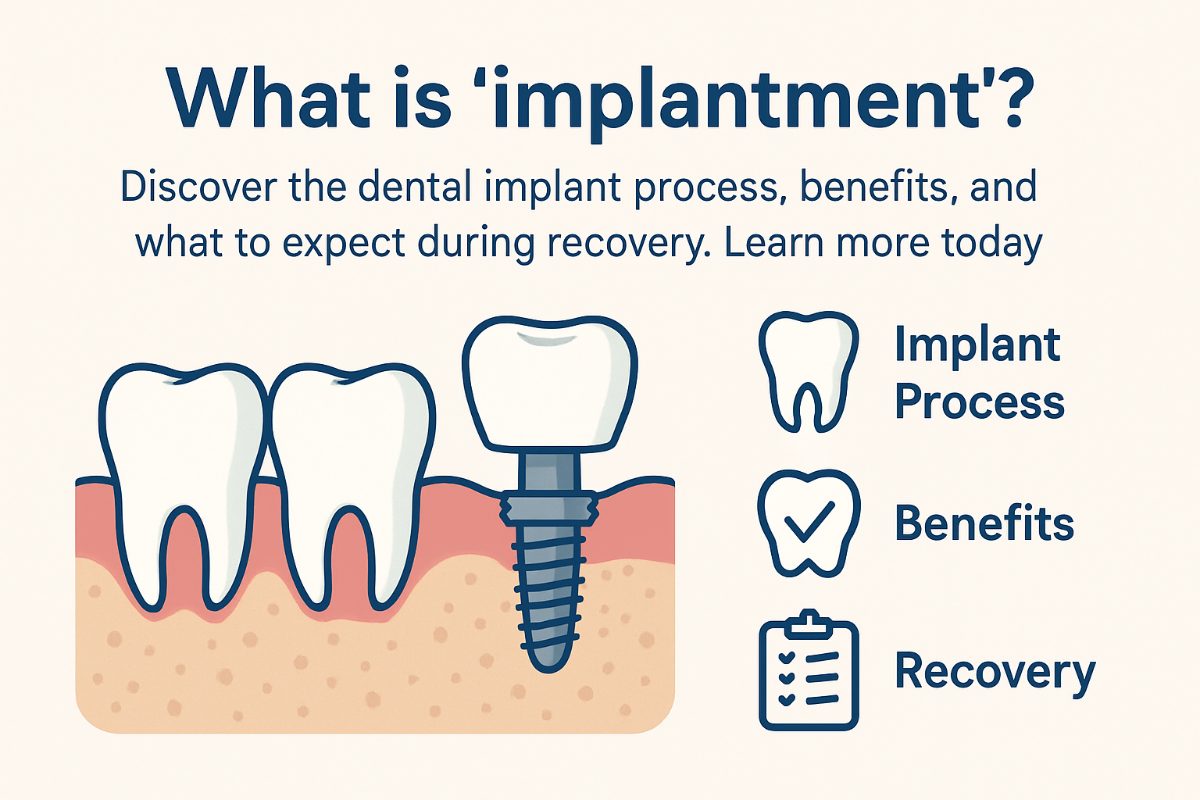
Implantment is a simple way to describe the full process of getting a dental implant — from planning and surgery to healing and the final tooth replacement. If you or a loved one is missing teeth, understanding implantment helps you know what to expect, how long treatment takes, and why implants often feel and work like natural teeth. This short guide explains the steps, benefits, risks, and next steps in plain language.
What “implantment” means
Implantment refers to the entire treatment process around a dental implant. That includes the surgical placement of the metal post, the healing phase where bone bonds to the implant, and the final restoration such as a crown, bridge, or denture. In short, implantment covers placement, integration, and restoration.
How implantment relates to dental implants
A dental implant is the physical device — usually a titanium post — placed into the jaw. Implantment is the larger care plan that makes that device function like a real tooth. During implantment, the implant becomes stable in the bone and then gets a custom tooth on top. Implantment transforms a metal post into a chewing tooth that looks and feels natural. The implant is the tool; implantment is the step-by-step treatment that produces a lasting result.
Planning and diagnosis
Successful implantment starts with a complete exam. Dentists use clinical exams, digital X-rays, and sometimes CBCT scans to check bone, nerves, and sinus locations. A clear treatment plan sets timelines, decides if grafting is needed, and explains options.
Surgical placement
Surgery for implant placement is usually done with local anesthesia and sometimes sedation. The dentist or surgeon places the implant into the jaw. Some cases allow immediate placement after tooth removal; others wait for healing. Most patients feel pressure but little pain during the procedure.
Healing and restoration
After placement, the jaw needs time to heal and bond to the implant — a process called osseointegration. Healing typically takes a few months. Once integration is strong, the dentist attaches an abutment and a permanent crown, bridge, or denture to complete the implantment.
Who is a candidate for implantment?
Good candidates generally have:
- Good overall health and controlled chronic conditions
- Healthy gums without active periodontal disease
- Enough jawbone for support, or willingness to have grafting
- Commitment to oral hygiene and regular dental visits
Alternatives like bridges or partial dentures may be better for some patients.
Benefits and risks of implantment
Benefits include stability for chewing, natural appearance, long-term bone preservation, and improved speech. Risks can include infection, poor healing, nerve or sinus issues, and higher initial cost. Careful planning reduces most risks associated with implantment.
What to expect during recovery from implantment
First 24–72 hours: swelling, mild pain, and soft-food diet. First 2 weeks: stitches may dissolve and discomfort fades. Months: bone integrates with the implant. Follow-up visits check healing; pain control and soft foods help recovery.
How dentists perform modern implantment
Today’s dentists use digital imaging, guided surgery, reliable implant systems, and lab-made restorations to improve accuracy and outcomes. These tools make treatment more predictable and comfortable for patients.
Cost considerations and financing for implantment
Costs vary by scope — single tooth, multiple teeth, or full-arch replacement — and by need for bone grafts or extra procedures. Many practices offer financing, membership plans, or in-network options to spread payments.
Choosing a dentist for implantment
Look for experience with implants, modern diagnostic tools, clear treatment plans, good patient reviews, and transparent pricing.
About David M. White, DDS — implantment experience
Dr. David M. White has provided care in Reno and northern Nevada since 2004. He offers implant dentistry using modern diagnostics, ongoing education, and personalized financing. The practice is known locally for patient-first care and strong community reputation.
Next steps: questions to ask and scheduling a consultation
Bring these questions to your consult:
- What is the timeline for my implantment?
- Are there alternatives and their pros/cons?
- What is the success rate for this treatment?
- What costs and financing options are available?
- How long will recovery take and what should I expect?
Call the office to schedule an exam or consultation and get a personalized plan.